- Cama-i, quyana tailuci!
- (Central Yup’ik)
- "Greetings, thank you for coming!"
Council Members
The Council of Alaska Native Languages members are appointed by the Governor of Alaska, and serve three-year terms. Council members are Alaska Native language professionals who provide recommendations for and foster the development of a comprehensive statewide Alaska Native language policy, strategy for improving the preservation, restoration and revitalization of Alaska Native languages.
Representative Nellie Unangiq Jimmie - Yup'ik
Senator Loki Tobin
Yaayuk Bernadette Alvanna-Stimpfle, Chair - Inupiaq
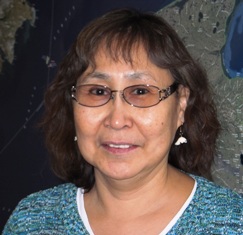
Ms. Alvanna-Stimpfle, of Nome, is a fluent, first-language speaker of Inupiaq and is the director of the Kawerak, Inc. Eskimo Heritage Program, and a doctoral candidate at Ka Haka ʻUla o Keʻelikōlani College of Hawaiian Language at the University of Hawaiʻi at Hilo. She has taught with Nome Public Schools for twenty-five years as a Bilingual-Bicultural Inupiaq language and culture teacher, a classroom teacher and worked with English as Second Language students and English Language Learners. She has taught Inupiaq at the Northwest Campus of the University of Alaska in Nome for many years. She has also worked as a teacher mentor for the Alaska Statewide Mentoring Project. From 1998-2008, Alvanna-Stimpfle was involved with the Alaska Rural Systemic Initiative where Native educators from all over the state developed standards for Culturally Responsive School Standards and ways to teach students from the Indigenous perspective. She is a member of the King Island Drummers and Dancers and a former member of the King Island Native Community Tribal Council. She is a member of the King Island Native Community Elders committee. Alvanna-Stimpfle holds a master’s degree in Education in Language and Literacy and a bachelor’s degree in Inupiaq language from UAF.
Walkie Charles, Vice-Chair - Yup'ik
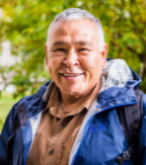
Dr. Charles, of Fairbanks, a fluent, first-language speaker of Yup’ik, is an associate professor of Yup'ik and Director of the Alaska Native Language Center (ANLC) at the University of Alaska Fairbanks (UAF). He is the first Alaska Native Director of ANLC. The Yup'ik language is one of two Alaska Native languages with bachelor’s degree programs; the other being Inupiaq. He grew up in Emmonak speaking Norton Sound Kotlik and lower Yukon Yup'ik dialects. He earned a bachelor's degree in elementary education at the University of Alaska Fairbanks, a master's degree at the University of Massachusetts at Amherst, and a Ph.D. in applied linguistics at UAF. His research interests are second language acquisition, dynamic assessment, and socio-cultural theory. A key interest of his is maintaining his language through teaching it at all educational levels. Charles also heads the Yup'ik Program at UAF. Dr. Charles was the Inaugural Chair of ANLPAC from 2012 to 2013.
X'unei Lance Twitchell, Member - Tlingit, Haida, Yup’ik, and Sami
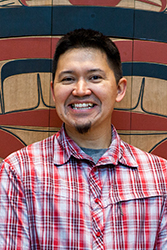
Xh’unei, Lance A. Twitchell, is associate professor of Alaska Native Languages at the University of Alaska Southeast.
Kay Larson-Blair, Member - Yup'ik, Unangan, Cherokee
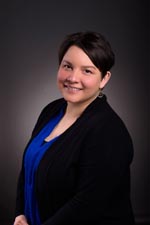
Ms. Larson-Blair from Dillingham and Tahlequah, Oklahoma (Cherokee Nation), is of Yup’ik, Unangan, Cherokee, and European heritage. She takes pride in her mixed cultural identity and is a tribal member of the Curyung Tribe. She currently calls Anchorage home, where she has raised her two daughters. Kay serves as the Cultural Heritage Program Director at the Bristol Bay Foundation where her work focuses on supporting language revitalization and reclamation efforts and grant management.
Throughout her career she has strived to bridge the gap between tradition and the contemporary world, ensuring the preservation and celebration of Alaska's rich cultural heritage and knowledge systems.
Beverly Kokrine, Member - Athabaskan
Netbaayaneekelno se’ooze’.
Eetaa’e Franklin Simon be’ooze’ gheelaa’ee.
Eetaa’ beto’, setseye Edwin Simon gheelaa’ee.
Eetaa’ baanh, setsoo Lydia Simon gheelaa’ee.
Eenaa’e Lillian Simon be’ooze’ gheelaa’ee.
Setseye Grafton Koyukuk gheelaa’ee.
Setsoo Agnes Koyukuk gheelaa’ee.
Ts’aateyhdenaadekk’ohn Denh hut’aanh eslaanh.
Troth yeddha’ lesdo.
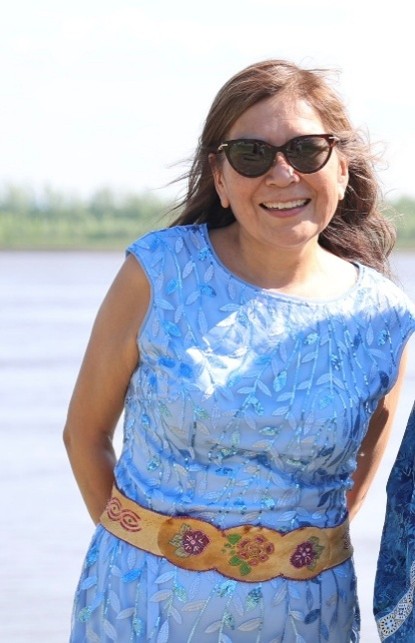
My name is Netbaayaneekeelnoh (someone wished her a long life) Beverly Kokrine.
My father was Franklin Simon.
My dad’s father was Edwin Simon.
My dad’s mother was Lydia Simon.
My mother was Lillian Simon.
My mother’s father was Grafton Koyukuk.
My mother’s mother was Agnes Koyukuk.
I am of the Huslia people. (The place where the forest fire burned out from the hill.)
I live in Fairbanks. Troth Yeddha’ - Tanana language for UAF hill.
Beverly Kokrine is a Koyukon Athabascan researcher. She was born and raised in Huslia, Alaska, on the Koyukuk River. Beverly is currently working on a PhD in Indigenous Studies at UAF. Her passion is researching Alaska Native cultures in Alaska. She attends Athabascan potlatches in Interior Alaska with a notebook and camera in hand. Beverly listened to her parents speak the Koyukon Athabascan language. As a lifelong learner, she takes notes on words as she learns more about Denakk’e, the Koyukon Athabascan language. Beverly is retired after serving as a teacher, principal, and assistant superintendent. She worked in the education system for over thirty years.
Christina Newhall, Member - Unangan
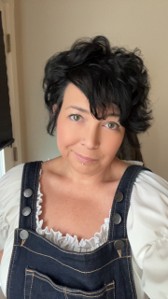
I am a member of the Native Village of Unga, AK. My grandmother, JoAnn (Cushing) Newhall, was born and raised on Unga Island in the Shumagin archipelago. The closure of the village’s Post Office forced families to leave Unga and my grandmother moved to the mainland to establish a homestead in Houston, AK. When I was young, my family relocated from Soldotna to Washington State, and I lived in the San Juan Islands for the next 20 years, graduating High school on Lopez Island. In my youth I was surrounded by Coast Salish teachers and artisans who championed visibility of their communities and political struggles, through the arts of woodworking, sculpture, glassblowing, silversmith jewelry-making, and educating the wider community about the importance of being mindful stewards of the land and waters.
During my studies in college I became very interested in the causes for the decline in Indigenous language use and the challenges communities faced in their efforts to preserve and revitalize Native languages. I became involved with the early revitalization efforts of Unangam Tunuu in 2014 within the Pribilof Islands and was later involved in grant funded projects aimed at preserving our heritage language. I worked with Elders in village communities conducting audio and visual recording for the purpose capturing fluent speakers sharing valuable cultural knowledge in Unangam Tunuu. The wisdom shared by our fluent Elders includes details about traditional plant and animal harvesting; embedded within the practical survival knowledge passed down through generations, there is a deeper emphasizes that highlights Unangan/s values and lifeways; these are maintained through respectful relationships between the people, animals, and waters of our homelands throughout the Aleutian Islands and are part of the bigger picture of why language preservation is critical to the coming generations of Alaska Natives.
I am currently an Associate Professor of Alaska Native Studies at the University of Alaska Anchorage. I pass on the knowledge and wisdom which was shared with me by facilitating student learning through an Indigenous lens, centering many critical issues addressed in my courses around the importance of stewardship, and the importance of keeping Alaska Native languages and traditions strong within our communities and across our state. I teach courses on Alaska Native Studies, language revitalization, oral traditions, Indigenous literacies, linguistic anthropology, and linguistics.
Education:
Ph.D. (2025) in Linguistics (Revitalization track), minor in Anthropology from the University of Arizona. Tucson, AZ.
M.A. (2016) Native American Languages and Linguistics, the University of Arizona, Tucson, AZ
B.S. (2015) Anthropology, minor in Native American Studies, Southern Oregon University. Ashland, OR
B.A. (2012) Humanities, minor in Music (vocalist), Washington State University. Pullman, WA
Areas of research: Cultural and linguistic revitalization and maintenance, the effects of globalization on Indigenous populations especially language shift, community building through decolonization practices, language documentation, links between traditional cultural practices and health and wellbeing, language ideologies, and constructs of identity.
Vacant, Member
For more information about the Council of Alaska Native Languages contact:
Cheryl DeWitt
Tribal Liaison
Office of Tribal Affairs
Alaska Department of Education & Early Development (DEED)
P.O. Box 110500, Juneau, Alaska 99811
Phone: 907-465-6776
Email: cheryl.dewitt@alaska.gov